

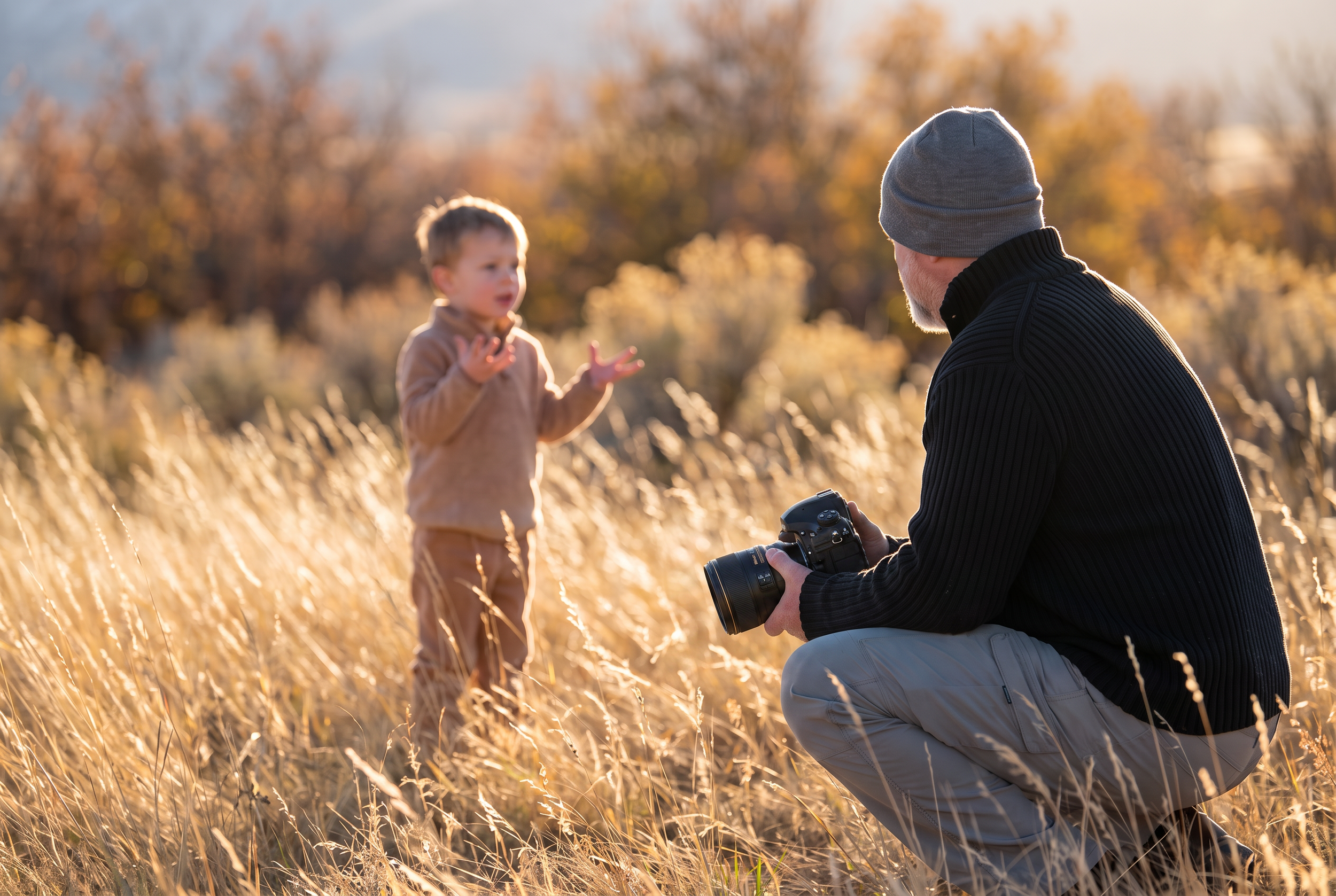
Every parent apologizes for their kids before a session starts.
"He won't sit still." "She hates having her picture taken." "They're going to be a nightmare, I'm so sorry."
They almost never are. And when they are, it usually produces the best photographs of the day.
Here's what actually works, and what I do when it doesn't.
Stop trying to get them to cooperate
This is the counterintuitive part. The more you push a kid to smile, sit still, and look at the camera, the more they resist. Kids are excellent at detecting performance anxiety in adults, and they respond to it by shutting down or melting down.
The sessions that work best are the ones where the kids forget there's a camera. That's not an accident, it's a strategy.
Let them move
Running, chasing, jumping, spinning. All of it. I shoot while they move. Some of the best family portraits I've made came from a kid who was absolutely not going to stand next to their sibling and then did it for exactly one second while laughing at something their dad said.
That one second is what ends up on the wall.
Bring something they love
A favorite toy, a snack, a joke only they know. Something that produces a genuine reaction rather than a performed one. I'll use it at the right moment. You don't have to engineer it, just have it available.
Don't warn them too much
Telling a five-year-old about the photo session for two weeks in advance gives them two weeks to build anxiety about it. A casual mention the day before is enough.
The toddler exception
Toddlers operate on their own schedule and nobody controls it. What I do: I work fast during the good windows and I let the chaos be part of the session during the bad ones. A toddler mid-meltdown, real tears, real frustration, photographed with the parent responding to them with genuine warmth, is often more meaningful than any posed smile.
The parents almost never believe me until they see it at the reveal.
The teenager exception
Teenagers who don't want to be there are actually easier than toddlers. They're self-conscious, not oppositional. Give them a moment of genuine laughter, usually at the expense of a parent, and the wall goes down. I find that moment deliberately. It's part of the session.
What I actually do
I don't direct much. I pay attention. I watch for the real expressions, the unguarded moments, the way siblings interact when they think nobody's looking. Then I'm ready when it happens.
Most families tell me after the reveal that they didn't even notice when I took their favorite image. That's not luck. It's what a million frames of paying attention looks like.
The real answer to the question
You don't need to get your kids to cooperate. You need a photographer who doesn't need them to.
